

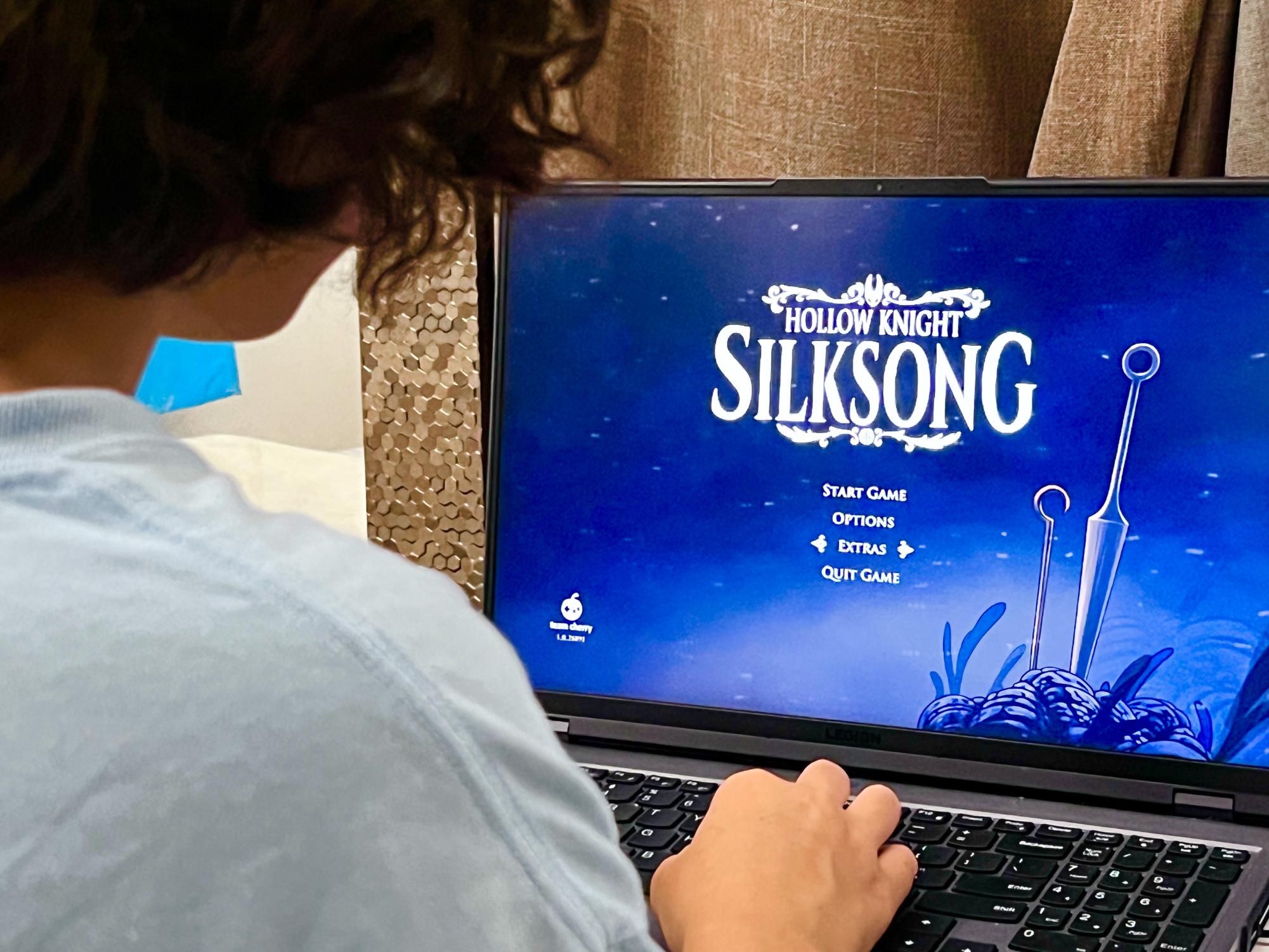
REVIEW: Silksong today! And it’s extraordinary!

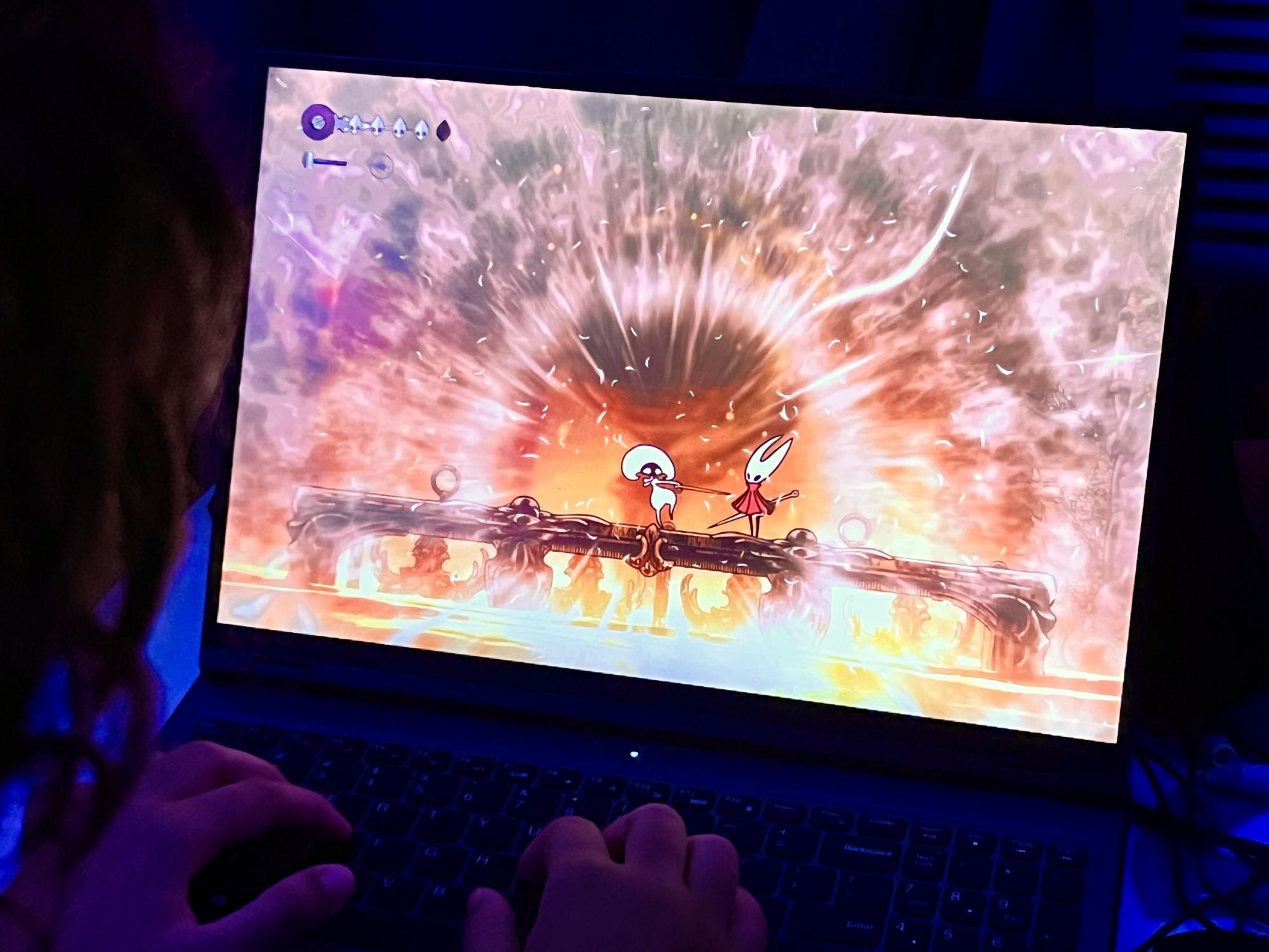
Hollow Knight: Silksong is the highly anticipated sequel to Team Cherry’s 2017 award-winning 2D metroidvania, Hollow Knight. Announced over six years ago with limited public updates on its development, a delay in 2023, and almost dead silence from the developers since 2023, until, of course, nearing its release on September 4.
Upon its release at 4 a.m. Hawaii time, the game immediately crashed every main platform station it was on. Yes, everyone: Steam, Nintendo eShop, and Xbox wouldn’t load for hours. Whether you were able to get the game was almost purely luck. I somehow got it on Xbox Game Pass around 4:15 a.m., but the livestream I was watching had less good fortune.
Hollow Knight: Silksong, an indie game for just $20, had literally broken everything.
I have a lot to say about this game, so feel free to jump to a specific section that covers what you’re looking for.
- A Brief Storyline Synopsis of Hollow Knight
- Basic Gameplay and Mechanics Review (Spoiler Free!!!)
- Difficulty Review (Light Spoilers for Names of Bosses/Areas!)
- Basic Plot / Act One Review
- Act Two Review
- Act Two Leading Into Act Three (Story Heavy)
- Act Three Story Summary (Big Spoilers)
- Act Three Review (Big Spoilers)
- Act Three Ending & Review (Spoilers, obviously)
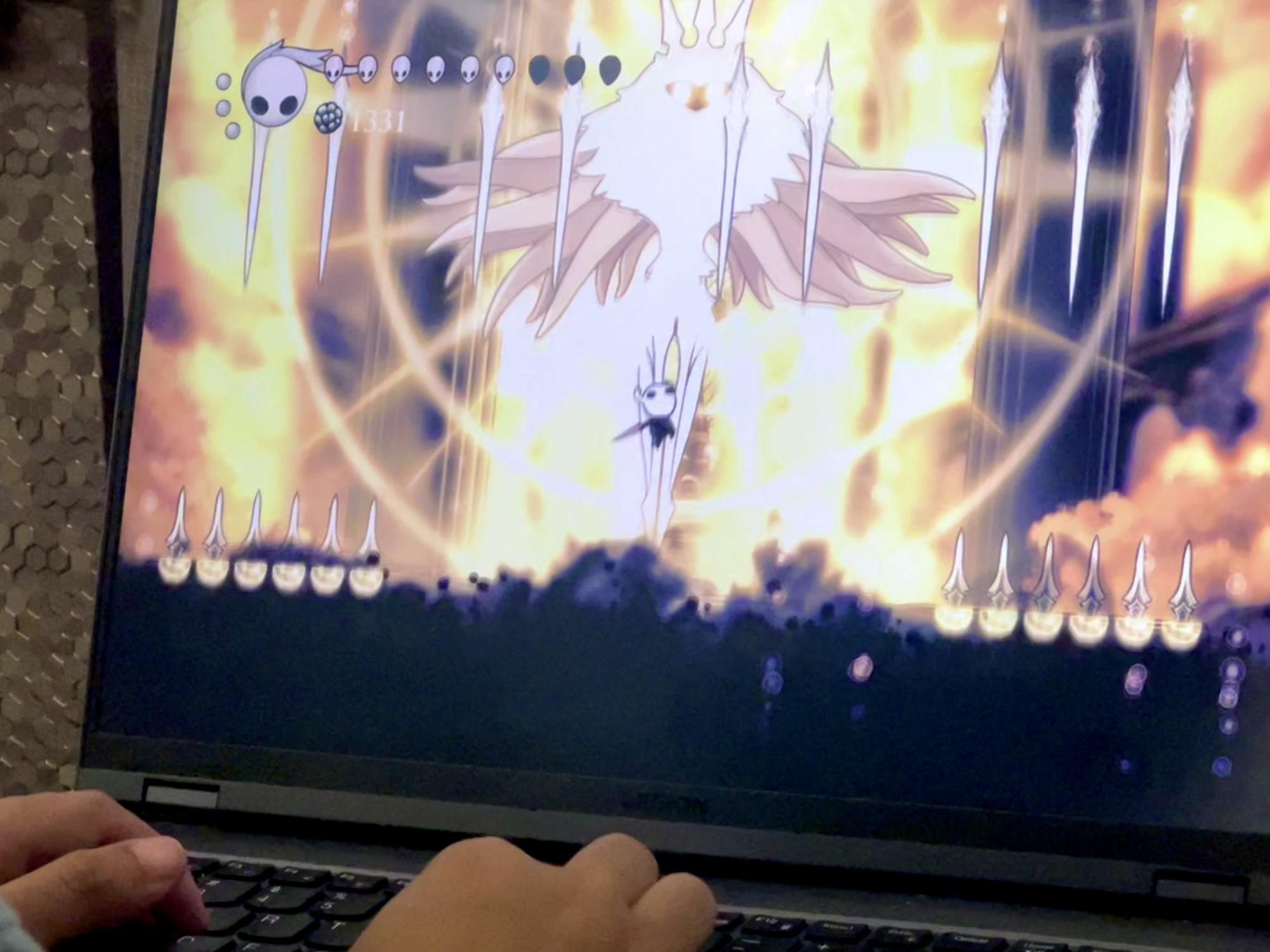
I’m going to try and give as brief of a summary as I can about the lore of the first game. I’ve attempted this two times already and both were way too long.
Hollow Knight takes place in the ruined kingdom of Hallownest once ruled by the Pale King. To protect his kingdom from a powerful mind infecting bug called the Radiance the king makes thousands of void-filled children called vessels in hopes to make one perfectly hollow. Without a mind to infect the Radiance would be trapped in the vessel forever.
One vessel, “The Hollow Knight” was chosen and sealed away with the Radiance inside. To keep that seal strong the Pale King asked three powerful bugs called the Dreamers to enter an eternal sleep and lock the temple. One of the dreamers, Herrah agreed on the condition the Pale King would help her bear a child: Hornet, the protagonist of Silksong.
You play as another vessel nicknamed “Ghost” who returns to Hallownest long after the kingdom has fallen. But many bugs are still trapped in a purgatory of the Radiance’s infection. You come back after you hear a roar from the Hollow Knight, signaling that it’s failing and the Radiance is breaking free.
To stop her, Ghost must defeat the dreamers and confront the Hollow Knight. Either take its place or seek a deeper truth. An ending nicknamed “True Ending” reveals more about the Ghost’s origins, the tragedy of their creation, and the fate of Hallownest. By remembering their forgotten past and embracing the nature of the void, Ghost unlocks the power to face the Radiance directly, with Hornet’s help.
In the end, Ghost sacrifices themself to destroy the Radiance once and for all, ending the kingdom’s eternal stasis. Though at the cost of their own life.
There are more endings, but those are the main two.
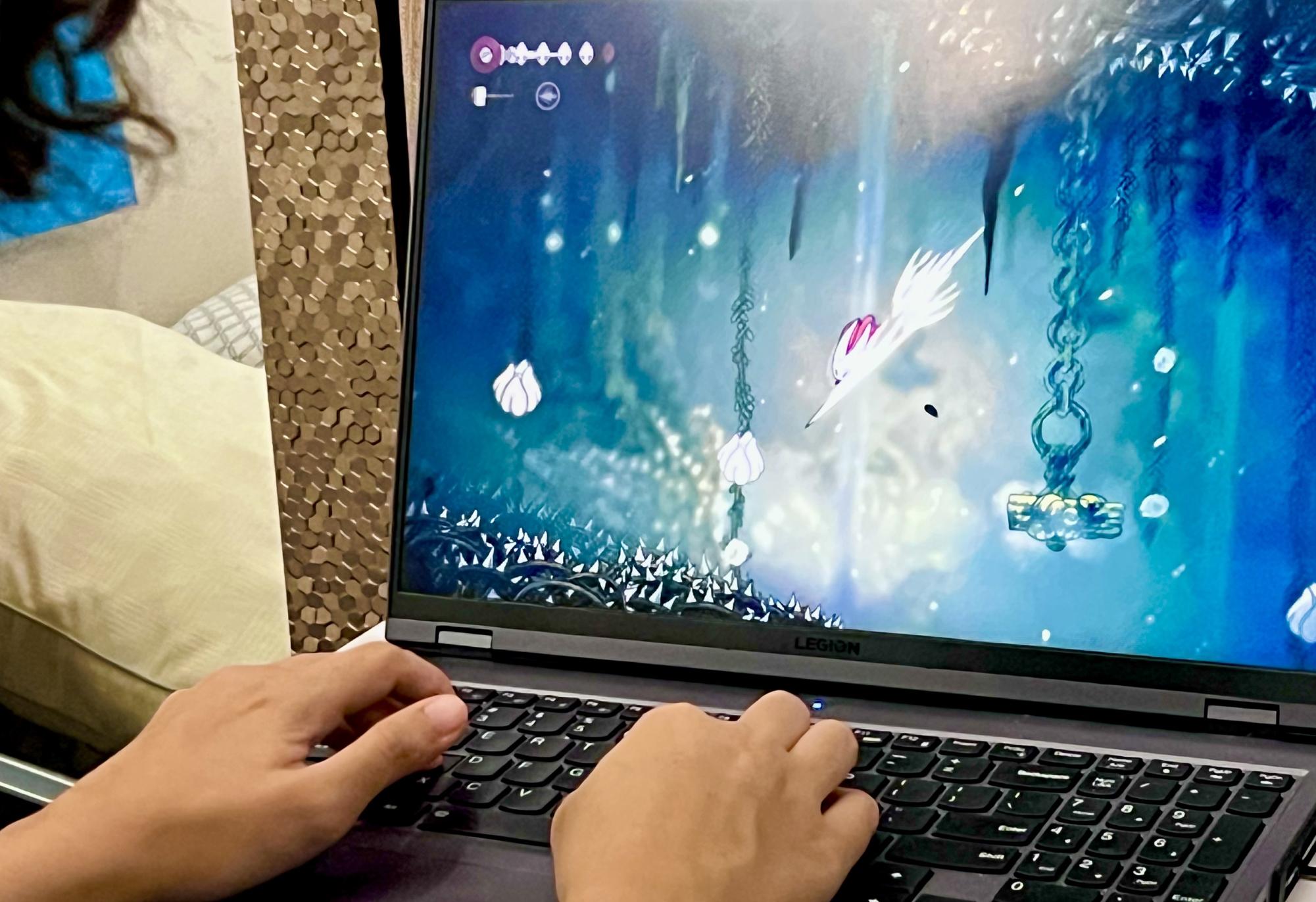
Silksong uses very similar core mechanics to Hollow Knight (HK). You have a weapon, a needle, with sideways, upward, and downward slashes. As you progress, you get basic abilities like silk skills (basically a new way to deal damage with silk), sprint, and wall cling, all of which have blatant parallels to HK abilities. Exploration is also very similar: new area, new ability, use it to move forward, with some secrets and side quests along the way.
With that in mind, it’s easy to think that playing it is very similar to Hollow Knight, which isn’t totally incorrect; the genre is the same in both games and it’s the same developers, too.
However, the more you play, the more you realize just how much the small differences completely change the play style of the game. While you can use some upgrades to play with the same combat style of HK, you’ll quickly realize you’re sacrificing stronger techniques and tools for the comfort of familiarity. Silksong encourages a new style, without forcing it.
So then what are the differences? Well, the sprint is not like HK’s dash. Sprint is sustained: hold the button and Hornet keeps going. It makes her feel way faster and more agile.
Healing also works differently despite its unassuming nature. You need a full silk bar to heal, but you get three hearts instantly and can even heal mid-air. It completely changes how you time and think about recovery
However, the biggest change is so drastic it hits immediately: pogoing. The downward slash (pogo/pogoing) was an overpowered method in HK. If timed correctly, you could “pogo” endlessly on enemies by looking downward and just slashing. It made platforming way easier as well, as you could pogo spikes to seamlessly “walk” through them.
That, however, is not the case for Silksong. Hornet’s pogo is diagonal! This caught me and most of the community off guard. Such a strong part of our move set was completely different. Every pogo now required repositioning, which adds a surprising layer of challenge. It’s a big change, but leads to a fun and satisfying experience once you’ve learnt it.
I wanted to take a section to talk about these mechanics because I believe them to be such an amazing and subtle part of the game! I love the contrasts and similarities between the two game’s mechanics, not just because it’s interesting to have to learn and change techniques, but because each change feels purposeful yet still incredibly fun.
The knight from HK is smaller, their movements are simple, almost robotic, they aren’t a trained warrior and have no mind to put tactics and thoughts into each move.
Hornet, however, was trained her entire life as a warrior. Her way of combat is faster (the sprint), more agile (the diagonal pogo) and more defined (silk skills). Isn’t that amazing? Every little change contributes so much to what we already knew about her personality! It’s world-building engrained into the game’s basic moves. The changes seem insignificant but they not only make the game a whole new experience if you choose to learn it, but they also add so much more character to Hornet without saying a word!
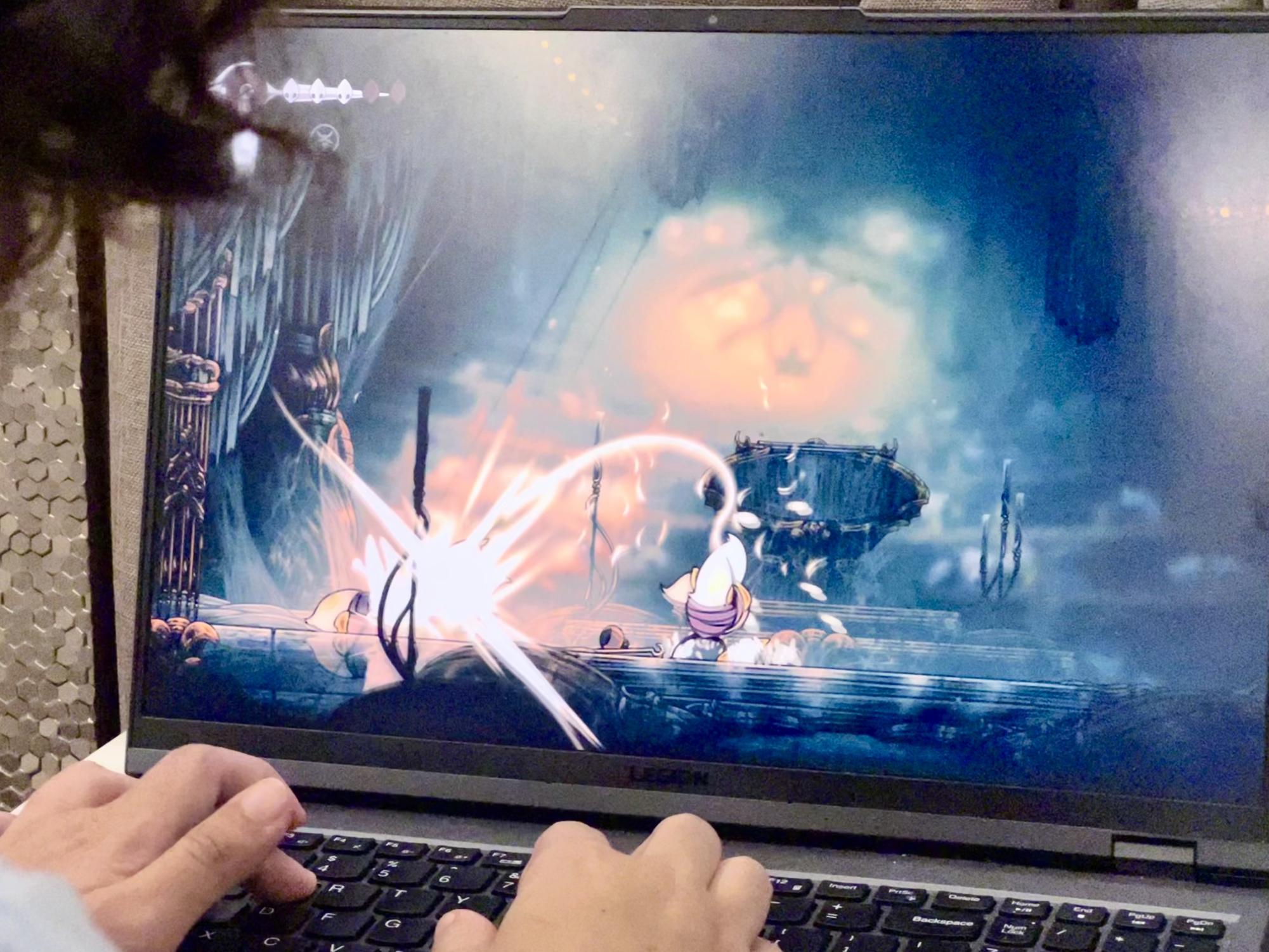
Silksong’s difficulty is a dramatic increase from Hollow Knight (HK). Most of it comes down to one thing: double damage. In HK, the nearest double-damage enemy—in a casual run—is in the right-side City of Tears or Fog Canyon. In Silksong? There’s one right in the Marrow, the area right after the first town (even earlier if you know about the secret enemy in the first room). You start with five hearts (masks in-game), but with double damage, you realize you functionally have three.
But what’s less talked about is the increase in platforming difficulty. In HK, pogoing was a great tool, but it wasn’t actually required to complete the game. Even in White Palace, pogoing makes parts of it easier, but is still never required. The one exception—Path of Pain—is hidden content. It’s optional, and doesn’t even count towards 112 percent.
In Silksong? Mandatory pogoing starts as early as Shellwood, with diagonal flower bounces. And you can’t get through Cogwork Core without pogoing timed moving gears. And that’s just for the normal ending. Even with the Wanderer’s Crest’s downward pogo, it’s still tough.
However, the difficulty increase doesn’t make it unenjoyable. I played by myself and also watched a friend play. We both struggled in our own areas. But we always tried again. It’s hard to call the game’s platforming or damage a ‘problem’ when evidence shows it’s still fun enough to get you to try again.
I thought HK was unfair at first and I know many others did too. However, the more you reach out of your comfort zone to try new methods, you realize just how much stronger they are. The game just wants you to learn how to use them. Silksong is the same; it’s harder, not unfair.
There is only one issue I truly have with the difficulty level, and it’s the gauntlets. I love this game to the moon and back, but I have to give critique where I find it.
Gauntlets aren’t fun. Not all of them are bad: Hunter’s March is fine, the Craws are annoying but manageable. Even Savage Beastfly spawning in enemies mid-fight is bearable. But gauntlets as a mechanic? Just not that enjoyable, and I don’t believe that’s a hot take.
You have these awesome telegraphed boss fights whose patterns you learn to predict, dodge, and punish. It feels like you’re constantly adapting. Even regular enemies in Silksong have detailed patterns; you just have to learn them. But in gauntlets, those patterns clash. Like their movesets weren’t designed to be stacked like they are, and the result feels unfair, tedious, and frustrating, like you’re tanking hits with no real control.
Take High Halls and Coral Towers. High halls isn’t as brutal as some say; with practice and patience, the gauntlet is fine. But that’s the thing, bosses feel worth learning because they’re enjoyable. Gauntlets don’t even feel fun enough to justify the grind. Even when you “master” them, it’s still a gamble based on enemies’ sporadic movements and rng.
This isn’t about skill level or dedication. It just doesn’t feel fun.
Let’s talk about the Coral Tower’s gauntlet. Or should I say, GAUNTLETS. And they’re actually… not that bad! Oddly enough, they’re probably the most enjoyable and well-designed gauntlets of the entire game! But there are four of them. And you have to redo all of them if you die. There’s a shortcut, but only after the third one. That’s just ridiculous.
Imagine your first playthrough in the gauntlets. You’re having fun, learning new enemies, adapting. But after dying a few times, it becomes a chore. You’re not excited to fight anymore; you’re exhausted.
This sentiment can be felt in many areas of the game, but those areas at least give you a fair chance to master it. As if you can feel yourself constantly verging on mastery. But not Coral Towers. It’s not enjoyable, nor do you feel like you’re gaining skill or improving each time. I beg of the “pro-gamers” to not think about this from their own perspective and skillset, but from the casual players and especially, the angle of what’s just actually fun.
This is my one gripe: get rid of maybe one or two waves or enemies in the high halls gauntlet and put at LEAST one more shortcut in Coral Towers. Ideally, after each one, but at least one after the second.
This game is a masterpiece that tests your skill, patience, and encourages you to experiment and grow. But I have to be honest to myself, some gauntlets just need to be reworked. Feel free to respectfully and maturely explain if you disagree with my opinion. I do genuinely want to hear more people’s opinions, especially about the coral towers gauntlets.
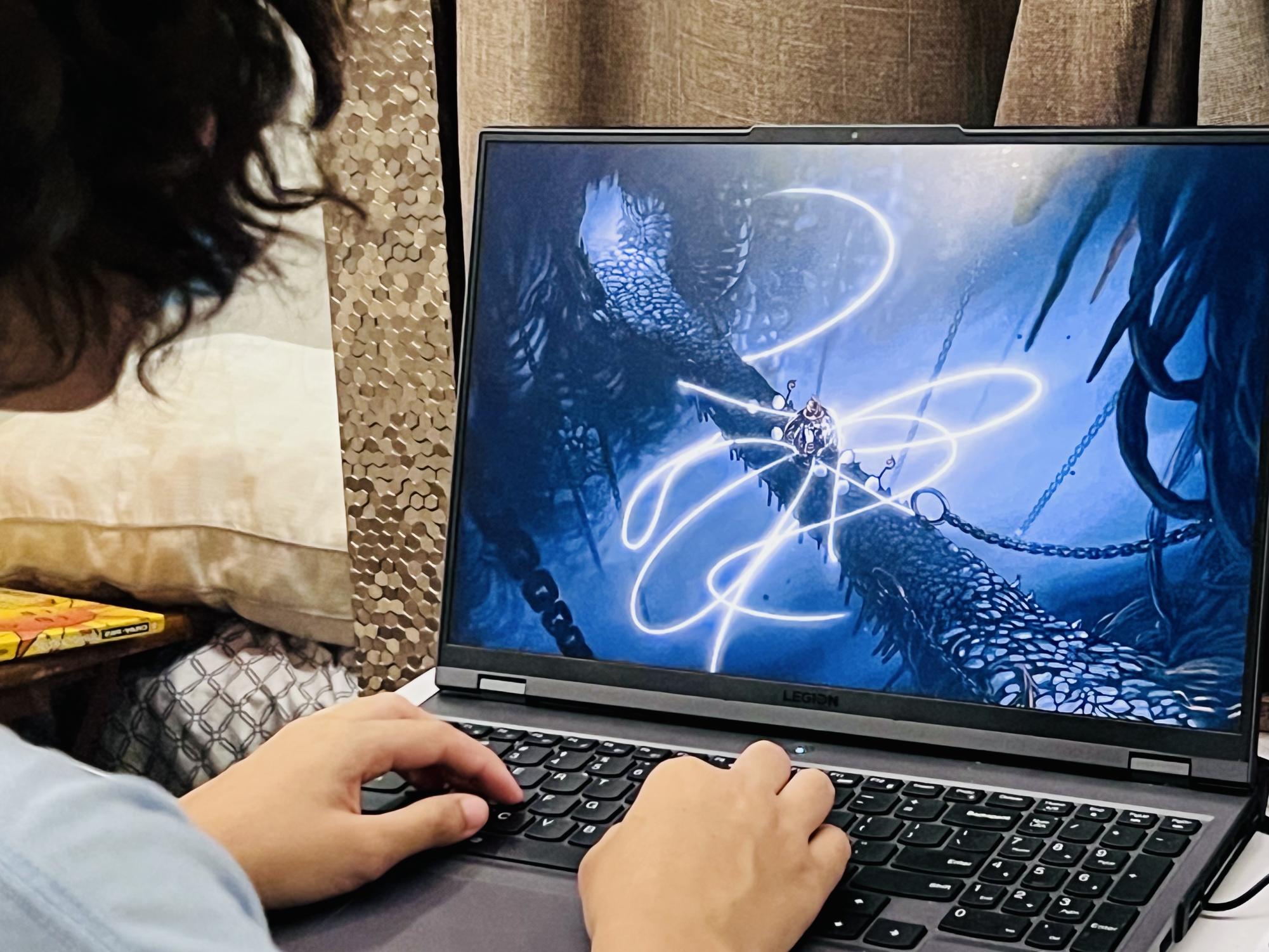
Team Cherry has stated that no ending to Hollow Knight is canon, but Hornet still ends up captured and taken to a distant land called Pharloom. On the way, a white moth breaks her bindings, and she crashes to the bottom of the kingdom where the story begins.
As Hornet continues, she hears of an enormous wealthy city at the top of Pharloom, The Citadel. It’s her main objective to reach that Citadel and discover why she was sought out and taken.
You learn of the pilgrims who come to Pharloom, hearing of the Citadel’s luxury and wishing to find it, but most die on the harsh journey.
The second area in the game is literally a forest made of the decayed bones of past pilgrims. The signs of the Citadel’s cruelty couldn’t be more obvious; its foundation is literally built on the backbones of its dead followers.
Act One is Pharloom, and its various areas leading up to the Citadel. During your journey, you realize the kingdom is wrapped up in a silk-based curse called the Haunting (similar to HK’s Infection). Enemies reanimate like puppets on strings, and it’s all tied to Hornet’s lineage with the Weavers. In HK, it’s implied that Hornet’s mother, Herrah, and the spiders of Deepnest came to Hallownest a long time ago fleeing from a distant kingdom (clearly Pharloom). So for whatever reason, Hornet, as one of the only remaining relatives to the weavers, is forcibly taken to Pharloom. To do what exactly? Well, that’s big spoiler territory.
Act One is the most reminiscent of Hollow Knight. However, it’s far from boring, the vast world of Pharloom is not only beautiful and diverse; it’s captivating, interactive, and feels incredibly alive.
Team Cherry has an odd talent for making the most depressing world and stories, but then adding such peculiar bits of zaniness. The cognitive dissonance between such an upsetting world paired with nonstop wacky mischief adds such a unique touch I’ve only ever gotten from HK and Silksong. That’s the best part of Silksong, especially Act One.
Sherma is painfully pure (especially if you know HK’s record for killing off such kind characters). The fleas get stuck in ridiculous places. Nuu tries to kiss you and constantly comments on your “adult mature spirit.” Garmond and Zaza’s humorous but cute style of combat and war cries like “Sensimo!” Chapel Maid who hits your unconscious body with a stick and remarks how she won’t let you die on her floor. Trobbio’s overdramatic theater kid spirit. Yarnaby’s questionable medical malpractice methods. And so many more.
The game is one of beautiful artwork, music, and story. But what gets overlooked is just how much the wacky spirit of Hollow Knight is still there, cranked up to ten. The world is so doom and gloom, but how can I be sad when Sherma is singing to a door, thinking that will get it to open?
Man, I didn’t even talk about Disgraced Chef Lugoli or as the fandom refers to him as, uh “Butt” Jim (replace butt with the more crude synonym). Given that name due to the fact he attacks you by slamming his giant behind into you… Anyways, my point still stands.
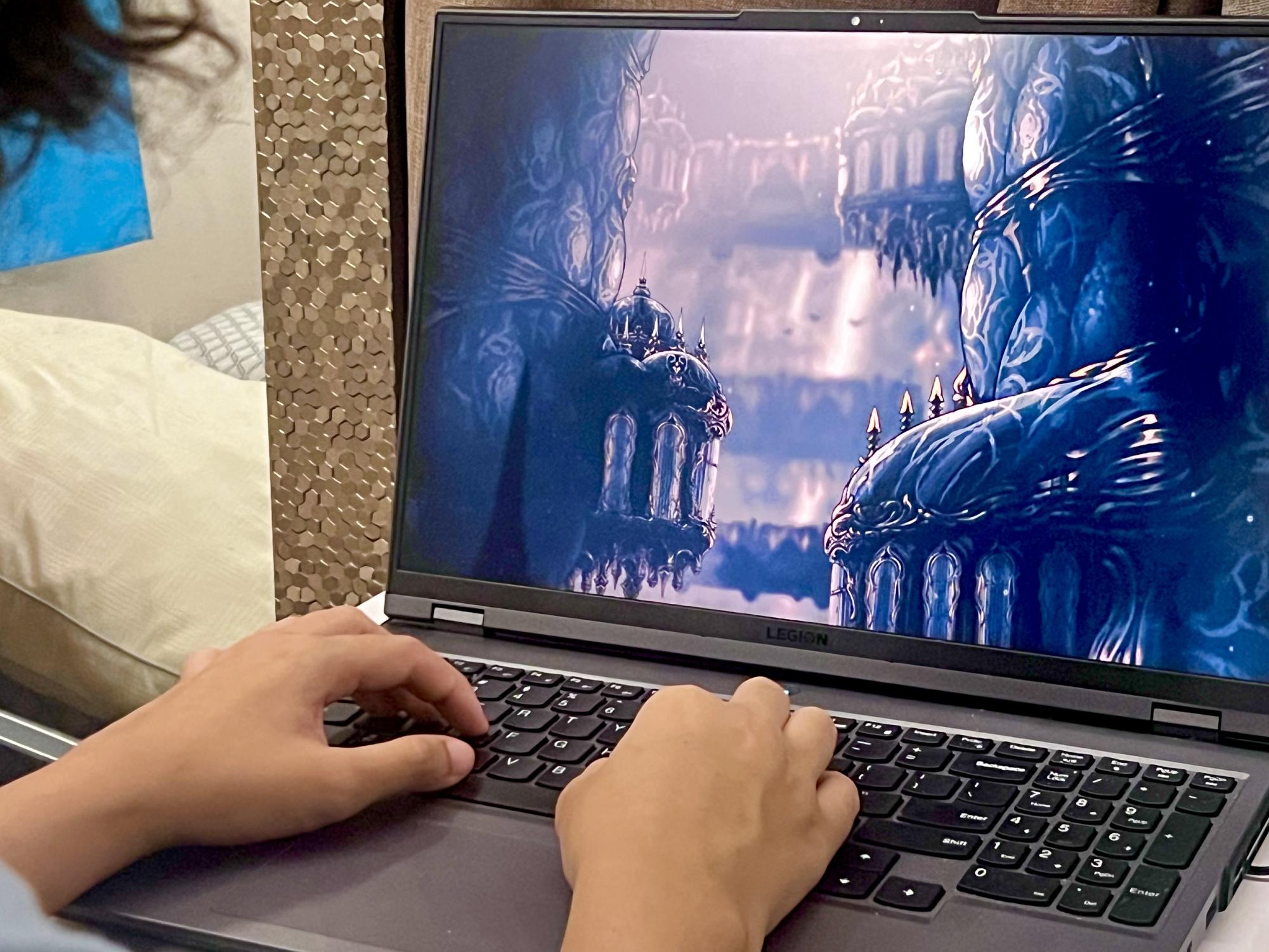
Act Two starts as soon as you arrive at the Citadel, either from the pilgrim’s intended route with the last judge, or the “sinner’s” route which leads to fighting Phantom. Getting to the Citadel was just the beginning, now Hornet must find and challenge whatever is the source of both the Haunting and her capture.
To ascend and meet the leader of Pharloom, you must acquire three melodies: The Architect, Conductor, and Vaultkeeper’s Melodies, each residing in subsection areas of the Citadel (very HK Dreamers-coded).
I’ll admit, nothing particular about each melody stands out to me. Each subsection is distinct and enjoyable but none feel super noteworthy. This might be because even though all of Pharloom (besides Mount Fay and Putrified Ducts I believe) can technically be accessed in Act One, you are more likely to be doing much of it after you’ve reached the Citadel simply because of convenience.
So between getting the melodies you’ll probably climb Mount Fay for double jump, be grabbing mask shards, spool fragments, memory lockets, and fleas, and overall exploring past areas much more in depth than before.
So what did stand out to me? The world-building is jam-packed in every corner of the Citadel, especially in the Underworks. The Underworks is the area right below the main Citadel and it’s where “sinners” are forced to work endlessly to repent for their sins. The area doesn’t exactly tell you, but it’s very blatant what’s going on.
The exploitation of the laborers is based on made-up values about “worthiness.” They work and work and work just for the small chance they will be appreciated and get to see the glory of the Citadel. It’s clear through design alone.
Every bench you have to pay to use, but when you get up it disappears, a mechanic specific to the Underworks. There’s a confessional booth that charges money only to replay a hollow, prerecorded message about sin and forgiveness. No one is listening; these bugs aren’t being guided, they’re being used.
And the worst part? The detail that made my heart drop, no enemy in the Underworks drops more than a single rosary (currency). As close as the Chambers above, enemies drop 10 to 20. These bugs work themselves to death for peanuts, only to spend it all just to rest, and do it again. The Citadel isn’t blind to its cruelty; it’s purposefully and intricately crafted to be that way.
The workers were never meant to be forgiven because the Citadel knows it needs them to run. But the workers don’t know that. So they keep laboring away for a small pitiful chance at absolution that will never come.
In my review of Act Two, I could only truly articulate why it’s still so amazing, using this specific example. Act Two’s best moments are the silent, brutal ones, the moments that show The Citadel’s unending cruelty in all aspects. You’ve worked and watched other pilgrims work and nearly die countless times to make it to this so-called haven. And it’s even worse than the rest of Pharloom.
Eventually, you obtain the melodies and rise to the Citadel’s Cradle and see Lace. She’s been stalking you all game, you fought her once in Deep Docks, and she clearly means to kill you.
The second fight with her reveals the truth, Lace isn’t even a bug, she’s made entirely of silk. An artificial “child” created by Pharloom’s leader. (It’s implied weavers can’t reproduce and this was Pharloom’s leader’s workaround).
After Lace, you ascend to the top and challenge Grandmother Silk. A haunting beautiful figure emerging from a sphere of white threads, the final boss. No words are spoken, combat immediately ensues as you strike her down, Hornet binds her power like any other ability. However this time, you gain abnormal amounts of power shown in the UI.
In the final cutscene, Haunting’s silk fades, but new, brighter threads descend. Hornet is cocooned in layers of silk, as her silhouette sprouts extra limbs and the screen fades to black.
And as the credits roll, you’re left wondering what on Earth that all was. I mean, you spent all this time working to end the cycle, right? But this wasn’t victory, you didn’t end the cycle. Hornet became the new source of the Haunting.
It’s an unsatisfactory ending, intentionally, the same way HK’s normal ending is. It leaves you opening the game again and wanting more. It’s encouragement to take harder paths and attempt difficult feats all at the chance for some sort of better ending. There must be another way, a better way.
But what is that?
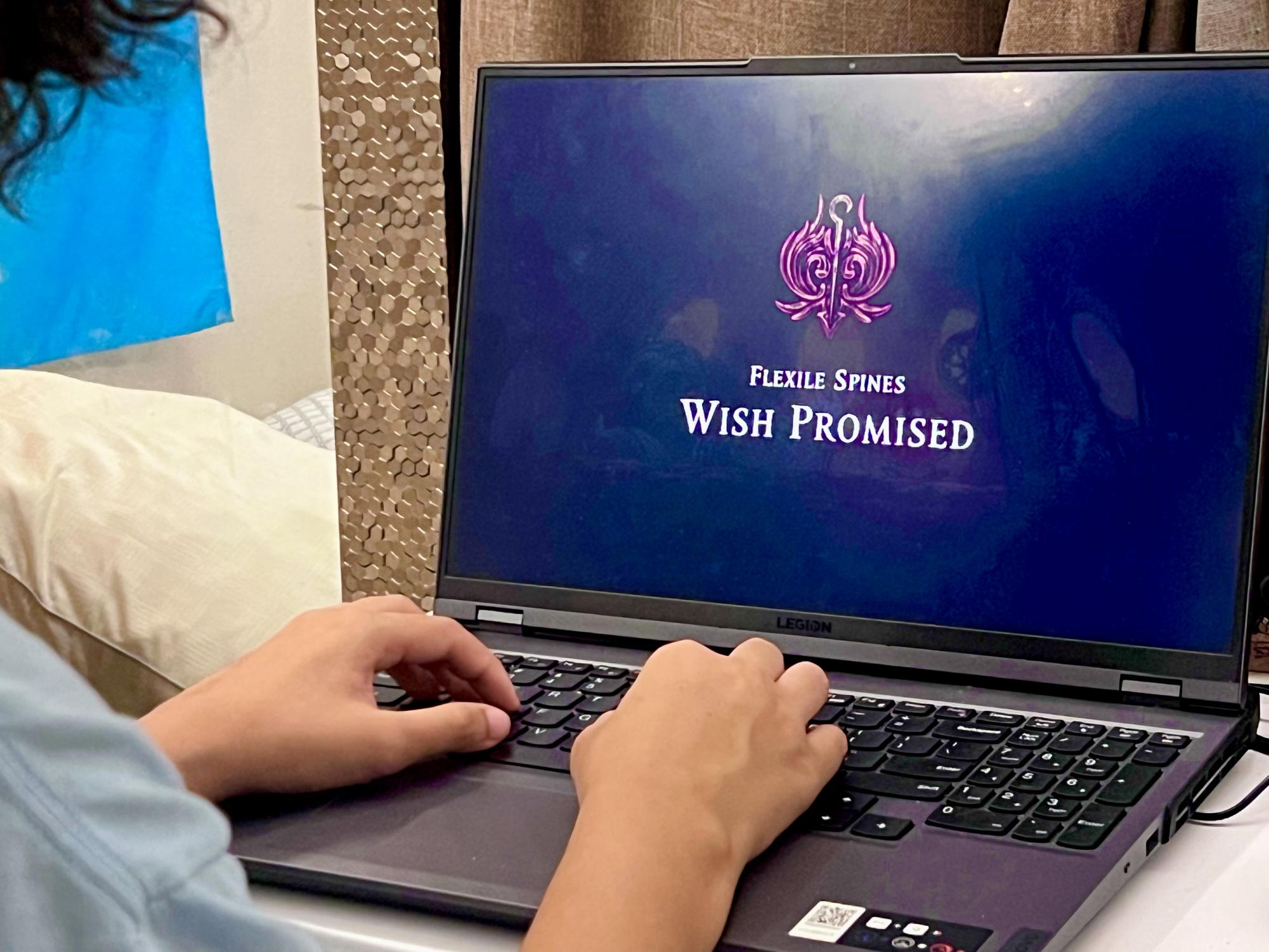
Well, Silksong has a small side feature I haven’t noted before, a quest system. You can grant “wishes” for the people of Pharloom. However, the game frames this aspect weirdly. When you accept the request, it states, “wish promised.” Interesting wording, even I noted on my playthrough. Is there a punishment for not finishing quests you promised to do? Not exactly.
Upon Hornet’s arrival, she can grant many bugs’ wishes: food, resources, money, and safety. And to make the active choice to pause on a goal that ultimately leads to the destruction of others (rekindling the Haunting’s power), Hornet’s bond with the people of Pharloom grows.
These quests aren’t detours; they represent her love for this kingdom’s citizens growing stronger. You see, Hornet is a Weaver and Pale Being by blood, and throughout the game, it’s implied, and she even states that her very being and genetics strongly tell her to gain power and control over others. But with every wish granted, Hornet’s own will to save this kingdom starts to finally outgrow and deny her lineage’s instincts and will.
Hornet wants another way, and it catches the attention of a mysterious NPC, the Caretaker. At first, he scolds you for bringing hope to other bugs, but as your will grasps for another ending, he takes notice and gives you one final quest: Silk and Soul. You must gather three old relics from the Caretaker’s “siblings” as well as a trap made by the old weavers of Pharloom.
You aren’t told who exactly his siblings are, but you’ve likely met them: the “Chapel Maid” from the first area in the game and the “Bell Hermit” found below Bellhart. The last one requires you to defeat Groal the Great in Bilewater first. Only to then find the last sibling’s deceased body.
Interestingly, I remember being very confused as to why Groal had an attack that looked like the vengeful spirit spell from HK. Well, this is why these siblings are tied to Soul, the magic system for spells from the first game. Unlike the Knight from HK, Hornet can’t use soul herself, but she can gather the remnants of it, plus an old weaver tool, to build a trap for Grandmother Silk.
You fight her again, but just as she’s downed, instead of binding, you play a song that activates the trap, and from the soul…!
Void emerges.
Void tendrils rise and attempt to drag Grandmother Silk down into the void, but she resists, clinging to you. At the last second, Lace appears, cuts off Grandmother Silk’s arm, and both she and Grandmother Silk are pulled into the Void.
But something goes wrong. Silk and Void clash violently, shaking all of Pharloom. Grandmother Silk is still resisting, Hornet falls from the Cradle as the screen fades and credits roll.
So is that the better ending you were seeking? If you try to reenter your save file, it’s overcome by void tendrils, but if you keep pressing, you’ll eventually break through them.
You wake up alone, the elevator and terrain around the Cradle is in ruins. Void tendrils have overtaken Pharloom.
Sorry for the big lore-heavy section, but there was a lot to set up for Act Three.
Anyways, Hornet is pissed about this outcome. Pharloom is crumbling and she’s the one who caused it. She goes to Deep Docks to start up an old machine to descend down to Pharloom’s very own Abyss. HK obviously had its own abyss and Pharloom has one, too (minus all the cracked shells of the Knight’s siblings in this one haha).
Once down there, Hornet learns that Lace and Grandmother Silk are below this deep lake of void, not yet dead. Grandmother Silk has used the last of her powers to create a giant cocoon below the lake. Not to keep herself safe, but Lace. But because Grandmother Silk is refusing to die, her thread on the bugs of Pharloom remains, and the void is using that to also control and overtake them. If Hornet doesn’t do something soon, Pharloom will completely crumble and collapse under the Void’s power.
The problem is, you can’t even touch Void without being attacked by it, and like I said in my HK summary, you can’t reason with it either; it’s like a force of nature. However, Hornet remembers something, one way to quell the void’s power.
The Everbloom, or as HK knew it the Fragile Flower, an unassuming (and frustrating) item, but one that led to a very weird ending in the first game. An ending where we technically saw the flower quell the void’s abilities, but had no idea it could even do that until that very moment.
Hornet hatches a plan to get the everbloom, since there is none in Pharloom, she wants to reach into her own memories using song (similar to dreamnailing in HK) to forcibly grab the flower from her memories. To have enough power to do this though, she must collect three hearts from old powerful leaders of Pharloom. I’ll talk about each specific heart later though.
Once that’s done, Hornet goes through her old memories and we see old areas of HK long before the events of the game. She grabs the Everbloom and descends back down to the Abyss where the actual final boss fight begins.
Everything about Act Three is truly perfect. It’s hard to even begin to describe my love for every aspect of it.
Firstly, let me talk about Hollow Knight for a second. I had no doubt in my mind that Silksong would be beautiful, amazing, and its story would knock me off my feet. However, I won’t lie to you, there was always a bias in me.
The Knight, as a character, is weird because it’s not even clear (in HK) if it ever truly had feelings. However, they have such an emotional rope on me. Their tragic story and everything they accomplished despite it all.
My guilty wish for Silksong was maybe a mention, an implication, heck anything about the Knight. I was overjoyed to even just see Lifeblood. I was ecstatic to see soul! But when void emerged from the trap, I was speechless.
Not only was Silksong not shying away from things in the first game, but it was also the entire last act’s plot! The game was amazing anyway, big connections to HK or not. However, I’m overly happy to see that Team Cherry saw the same thing as me: That a plot which connects vital points from Hollow Knight would be one of the most satisfactory plot lines it could give.
Handled so beautifully with still so much surprise, might I add. The whole game leading up to that moment makes it so much cooler than if void or was shown or mentioned any time earlier.
Neither does its inclusion feel in any way repetitive to the first game. Seeing void from this new perspective, more antagonistic, is so much scarier than in the first game (as we were literally made of the stuff and were able to subdue it).
So the void plotline is fulfilling and unique, as for gathering the three hearts. Those are great as well, but, similarly to the melodies, they’re amazing but not anything I can say that doesn’t feel very repetitive.
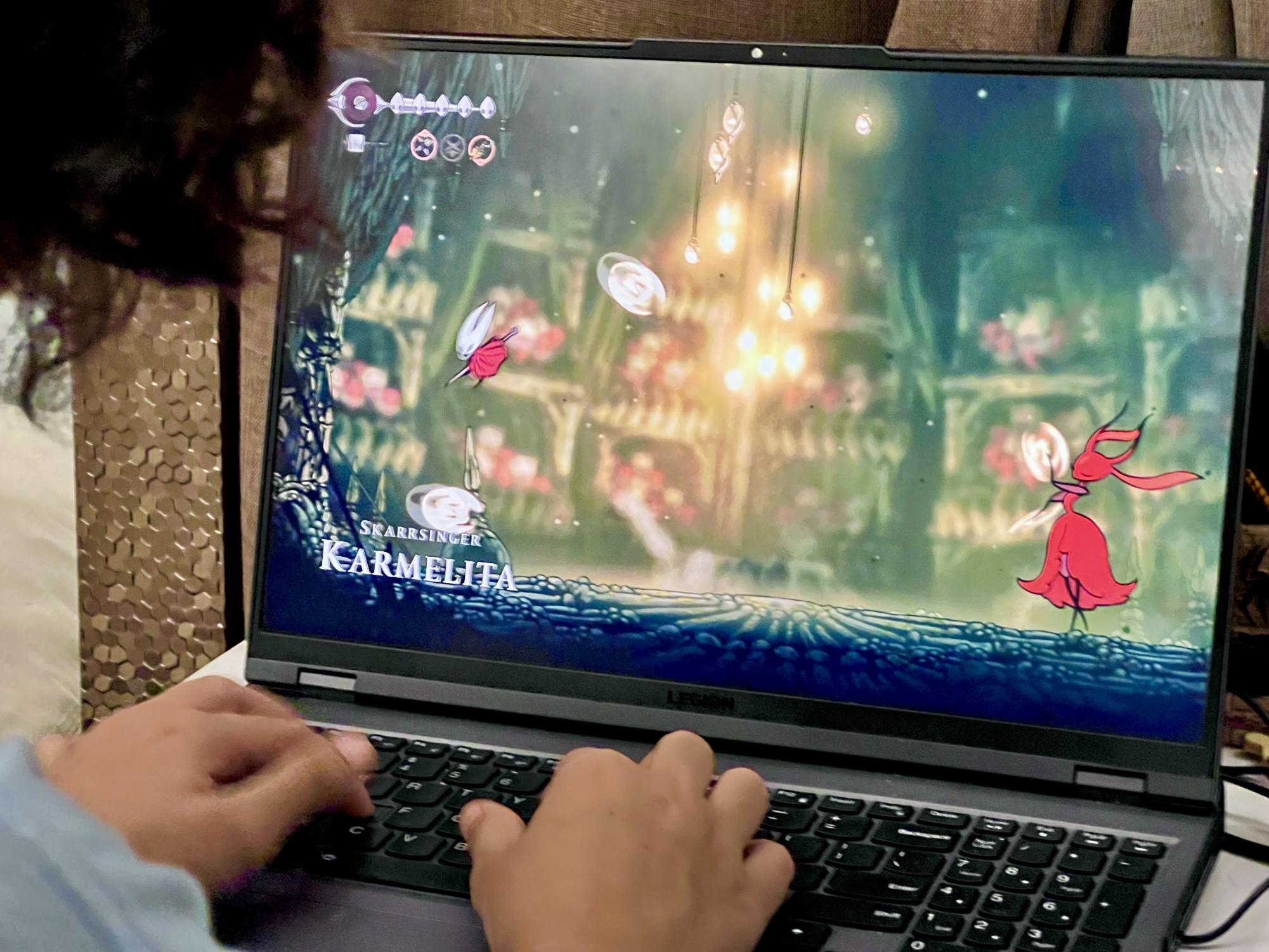
Karmelita’s fight is one of the best. Coral Towers is beautiful (although you know how I feel about the gauntlets). Nyleth has a cool design but a simple fight, she is kind of overshadowed by the fight right before that, Shrine Guardian Seth Goldman (however, that’s rightfully so).
I did consider talking about Seth, as he does deserve the recognition. However ,I ultimately decided against it as it feels a little disrespectful to talk about his story in the aspect of a review. Just know that I have nothing but admiration and respect for Seth Goldman and Team Cherry. I’d suggest just looking into it yourself.
Once the hearts are all gained and the Everbloom retrieved from Hornet’s memories, Hornet dives down into the abyss with an insanely magnificent and intense cutscene and music.
She finds herself in the sphere Grandmother Silk has made to keep Lace safe. However, who you find is no longer Lace, but the final bossfight, Lost Lace, a version of her overcome by void.
This boss fight is by far my favorite in the entire game. My favorite battles have always been the ones that feel like actual duels because of the satisfaction and fun. I adored both of Lace’s previous fights, but Lost Lace is the perfect difficulty for a final fight with Lace. I loved learning this fight because it feels like a dance, and you learn with each move, not only how to dodge but how to get hits with every specific move the enemy does. However, it’s still quick enough that it keeps you on your toes and keeps up with the pace.
As the fight continues, with each phase, the encasing of silk starts slowly filling with void, as it seeps through and Grandmother silk loses the power to keep it safe. Lost Lace’s moves are like normal Lace’s, but are overcome by a void that makes them stronger.
Eventually, you knock Lace down, and her body is freed from the void, but the void is flooding the walls and filling fast. As Hornet grabs Lace, she looks towards Grandmother Silk, and with Grandmother Silk’s final strength, she gives Hornet the last of her silken strength for one final and powerful super jump out of the void.
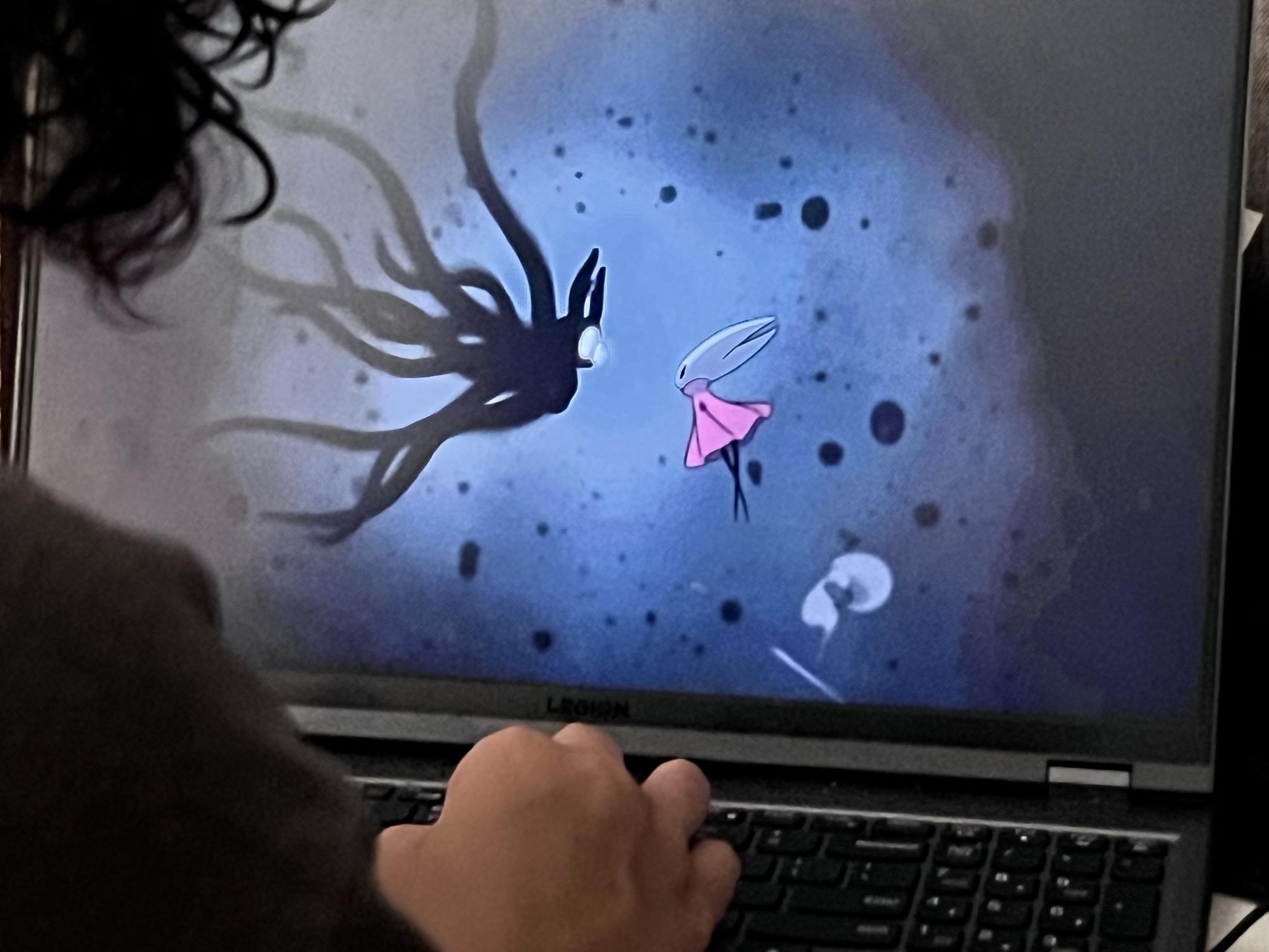
Hornet soars through void tendrils, Lace in one hand and the Everbloom protecting her in the other. But despite Grandmother’s Silk last attempt as well as the Everbloom’s protection. Neither is enough to propel Hornet fully out of the void’s fathomless sea.
Hornet floats through the void defeatedly, with no more strength to do anything else, as the Everbloom’s final petals fade and shatter away from the abyss.
Void tendrils instantaneously rush towards Hornet, intent on violently shredding her to pieces when—
The tendrils are cut by something. Something is, protecting her, Hornet looks up to see none other than Ghost.
Ghost’s shade, void tendrils and bright white eyes stare at Hornet, as she passes out.
The screen fades to black and cuts to above the void’s lake. Where we can see the void threads vanishing from Pharloom. Hornet is carried gently by Ghost onto the platform, with Lace beside her as well.
Hornet wakes up and stands as Lace follows suit. Lace begins to giggle sadly as Hornet just—stares.
Where do I even begin to talk about this? I already discussed how happy I was just to see void in Silksong, but Ghost/Knight? I was on the verge of tears.
This game is not only a masterpiece to have improved so much upon its predecessor, but also to pursue and combine so beautifully with Hollow Knight.
Ghost was our character for so long, and after years of believing they were gone or at least that we’d never see them again, they go against the very nature and instinct of the void to protect their sibling. To protect Hornet.
That story is hard to describe as anything other than wonder. How a game so highly anticipated and hyped for years can somehow still surprise and amaze is truly a treasure of gaming.