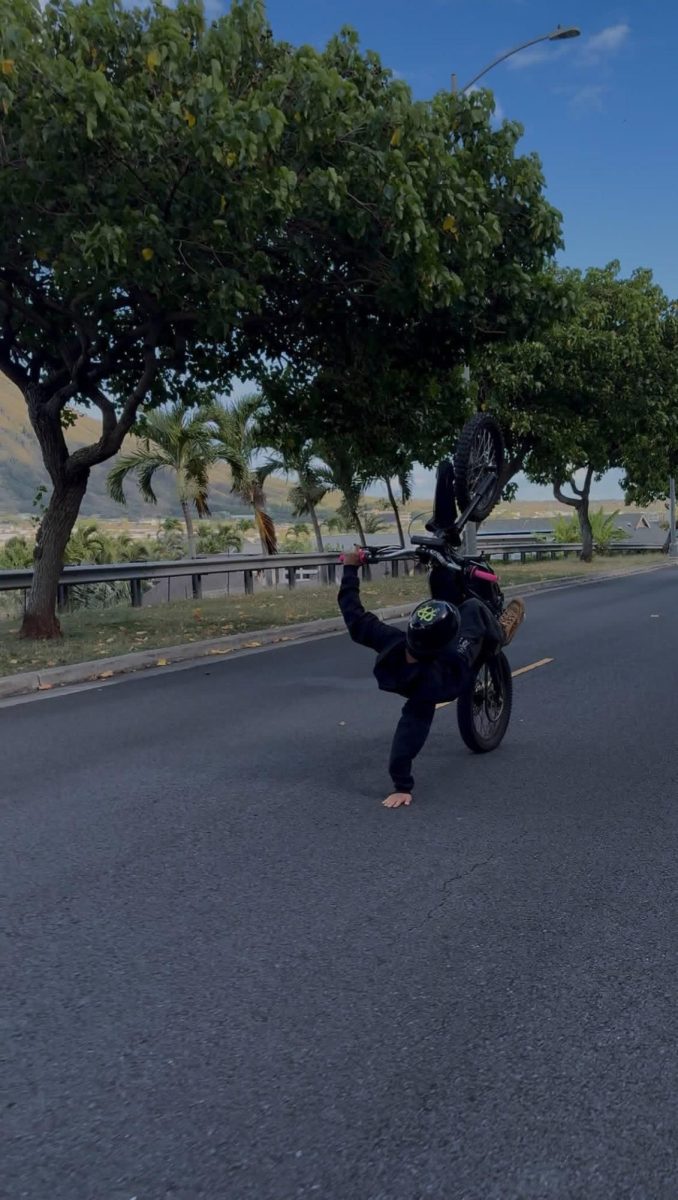
A Kalani student was hit on his electric bike on the way to school at the Aina Haina Shopping Center intersection on Monday, Aug. 18. This wasn’t the first time an accident like this happened to a Hawai’i high school student. Statistics on e-bike accidents in Hawaii aren’t available yet; however, the state reports that injuries have been more severe because youth e-bike riders are not wearing helmets.
And the trend is national. The New York Times published an article on Nov. 30 titled “The Dangers of E-Bikes” that discussed the growing hazards associated with unregulated electric bikes on American streets.
According to the Honolulu Police Department’s Public Affairs Office, there have been “14 documented e-bike incidents” so far this year. No additional information was provided about the severity of the incidents.
The risk of accidents is high, but students continue to use e-bikes for recreation and transportation.
“I use [e-bikes] for my own convenience to get to school,” Noa Ohelo (9) says.
The Hawai’i State Department of Education has set new rules and expectations for e-bikes. According to the memo sent to students and parents on Nov. 5, electric dirt bikes are not permitted on campus, as they can reach very high speeds and aren’t designed for student use. Children under 15 are not permitted to ride e-bikes. Therefore, there shouldn’t be any e-bikes on elementary and intermediate school grounds. For High School, students over 15 are allowed to use the e-bike, but only if they have proper registration and the proper decal.
“I feel like the new rule.. I don’t really like it because a couple people ride their e-bikes to school and it could affect them,” Ohelo says.
Honolulu Emergency Medical Services says factors contributing to recent accidents include speeding, impaired and reckless driving.

According to a Hawaii News Now report published on Sept. 8, two boys on an e-bike were hospitalized after a vehicle hit them at Farrington High School. Neither was wearing a helmet. The New York Times article emphasized the need for riders to wear helmets and follow all rules of the road, like stopping at lights and using hand signals.
Wearing helmets safely and adequately has become a priority for Hawaii lawmakers. At the beginning of the year, Mayor Rick Blangiardi signed Bill 52, which outlines the new expectations for e-bike riders:
“Children under 18 years old must wear a helmet, cannot exceed the 750-watt limit, and shouldn’t perform any tricks like wheelies.”
For many, riding e-bikes is a fun adrenaline rush. But of course, adrenaline chasing can come at a cost — that cost being injuries and accidents.
Christian Kekai, a freshman at Kalani, has been riding for 10 months. He enjoys doing tricks on his e-bike, but like other riders, he has had several accidents and injuries.
“I’ve actually broke both my ankles, almost tore my achilles, fractured my foot, and was in a boot for like a month,” Kekai says. “I was being too hammah and ate it really bad, my breaks gave out on me and my bike landed on my ankle.”