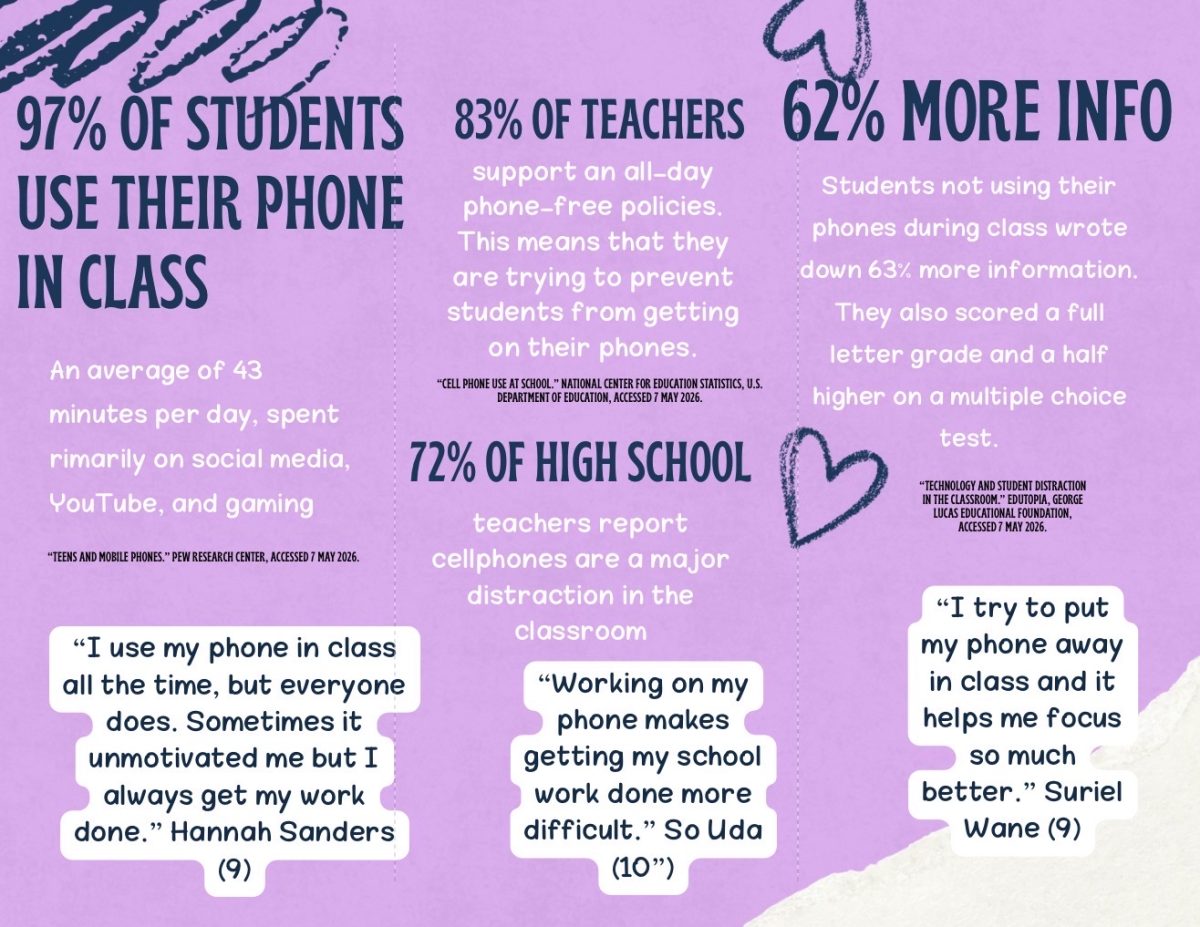
From the moment phones became accessible to the public, the faces of youth have been glued to them; people’s whole lives revolve around rectangular screens. Phones can be used to build community, maintain long-distance relationships, and keep up with the latest trends. They can also be used for basic day-to-day needs like banking, work, and tracking your health. With the threat of phones being taken away, teens are, as expected, upset. Starting in the 2026-2027 school year, the Hawaii Department of Education (HIDOE) has decided to implement stricter, harsher phone policies for grades K-12. For elementary and middle schoolers, phones are entirely banned, meaning they need to be out of sight all day. With high schoolers, phones are only prohibited during instructional use so during breaks like lunch, phones can still be used.
I can understand why this phone policy is being put into place; however, I do not agree with it overall.
The HIDOE wants to “limit distractions” with this new policy, but phones and technology can actually have the opposite effect. Studies from National University show that listening to music while doing school work/studying can help to relieve stress, improve test pressure, and ease test anxiety. On top of that, according to Stanford studies music helps your brain pay attention and engage, it helps stimulate your brain, and the intermissions between music can help sustain focus. This shows how phones can be a reliable way to maintain focus.

The ban on phones is also raising concerns about student safety. In case of an emergency, students may struggle to contact their parents or for help if their phone is away from them. Along with that, it could take away students’ ability to report dangerous or toxic behavior by teachers or staff. Having a phone within arm’s reach can provide students with a sense of security and peace, which supports a productive learning environment. While the HIDOE believes it will help students focus, it’s honestly just making kids of all ages more anxious.
Middle school students face a complete ban on phones. So many young teens use their phones to help operate their social lives and manage their mental health. When someone is having a bad day, all it could take to instantly brighten their day is seeing a message from friends or family or laughing at a silly post. According to the Pennsylvania State University, viewing online memes increases positive emotions. These moments when young teens look at their phones can happen during breaks and lunchtime, allowing students to reset their minds and boost their spirits.
I understand that improper use of phones in a classroom is disrespectful, so instead of banning phones completely, there should be consequences for their misuse. If someone is constantly on it and not completing work, it should be taken away, or the student should be punished. Students should be taught how to use their phones to stay productive rather than doomscrolling. If some students don’t know how to use their phones responsibly, that shouldn’t mean taking phones away from all students.
Take time out of your day to express the concern many students have about the HIDOE board. Voice your opinions so they can see what the community actually wants. Banning phones won’t make students pay more attention or care about school; that is completely up to them, whether or not phones are restricted.